AI toy development for brands and manufacturers

Smart AI toys built for play, safety, and production.

AIToyX helps toy teams create interactive companions across plush AI toys, robot/plastic shell AI toys, and embedded AI core module mechanisms.

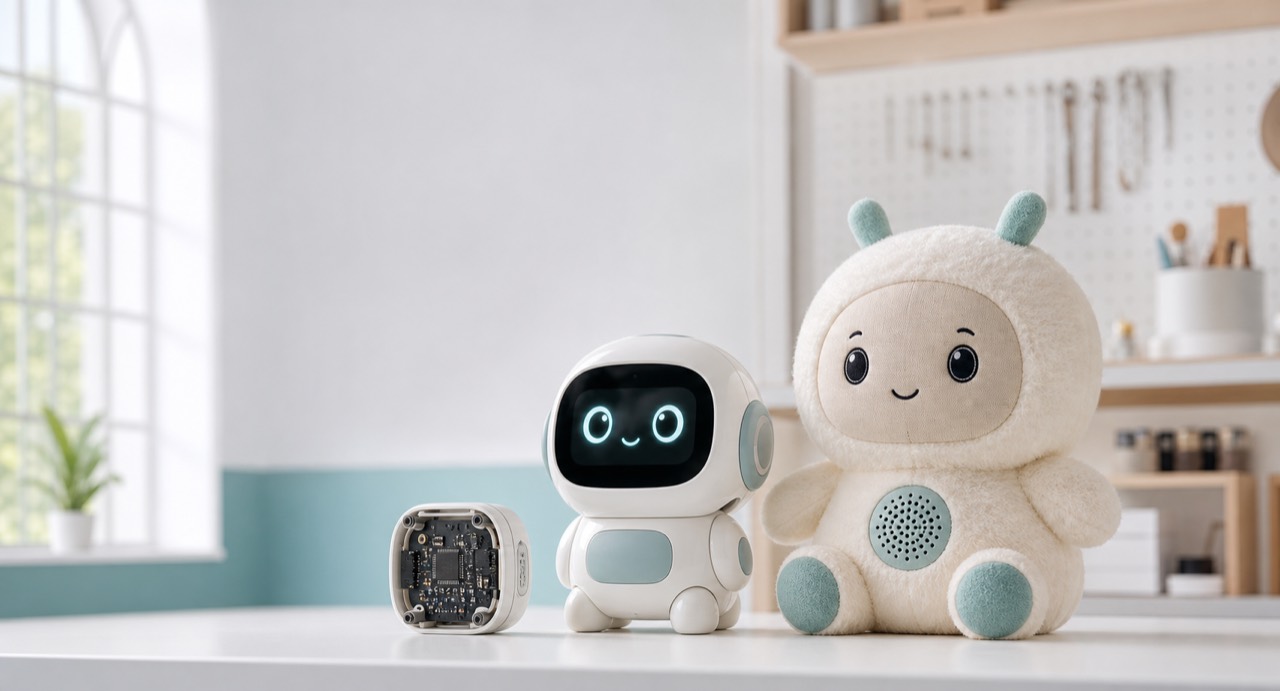
A product lineup showing a plush AI toy, a robot plastic shell AI toy, and an AI core module mechanism.
Three build paths: soft companion, expressive robot toy, and embeddable AI mechanism.

Search engines and buyers need the same thing: clear, useful information. This page describes what AIToyX builds, who it serves, and how each AI toy category moves from concept to manufacturing-ready prototype.

Product Categories

AI toy formats for different product lines

01

Plush AI Toys

Voice-enabled plush companions for bedtime, language practice, storytelling, and emotionally warm play experiences.

  • Soft body integration with hidden electronics
  • Child-friendly voice and response design
  • Washability, battery, and safety planning
02

Robot/Plastic Shell AI Toys

Durable AI toys with expressive screens, light feedback, movement, and character-led interaction for retail-ready products.

  • Industrial design for plastic housings
  • Motion, lights, sound, and sensor planning
  • Prototype-to-tooling feasibility review
03

AI Core Module/Mechanism

Embeddable AI mechanisms for manufacturers who already have a toy shell, character, or brand concept and need the interactive core.

  • Voice, speaker, microphone, and control board packages
  • Firmware-ready interaction architecture
  • Configurable module sizes for different toy bodies

AI Toy Platform

Designed around conversation, character, and manufacturing.

Conversation Design

Age-aware voice flows, response boundaries, and character scripts that keep play understandable.

Hardware Integration

Microphone, speaker, battery, board, and enclosure decisions are planned together from the start.

Safety Review

Materials, seams, charging, privacy, and content controls are considered before prototype approval.

Manufacturing Handoff

Teams receive practical specifications for sampling, supplier review, and production iteration.

Development Process

From concept to sample-ready AI toy

  1. Define the play pattern. Map the target age, interaction style, character voice, and product category.
  2. Build the interaction prototype. Test conversation flows, audio quality, controls, and product behaviors.
  3. Engineer the toy body. Fit electronics into plush, robot shells, or modular mechanisms.
  4. Prepare for production. Review safety, supplier feasibility, cost targets, and sample iteration.

Start With a Product Brief

Build an AI toy that buyers can understand and factories can make.